In aquaculture, sustainability should not be considered solely as an environmental goal. Truly sustainable production is directly related to how efficiently resources are used, how well processes are controlled, and how predictable production outcomes are. At this point, feed efficiency forms the operational foundation of sustainability.
Feed is one of the highest cost items in fish farming and at the same time the main determinant of environmental impact. How effectively the feed used is converted into fish growth is a critical factor that defines overall production efficiency. Feed Conversion Ratio (FCR) is one of the most fundamental indicators used to measure this conversion. A low FCR indicates that the same growth is achieved with less feed, while a high FCR points to feed loss, uneven growth, and increasing costs.
Improving feed efficiency does not only provide economic advantages. It also means lower raw material consumption, reduced waste generation, and a decrease in environmental impact. For this reason, feed efficiency represents a practical and measurable counterpart of environmental sustainability. For operations aiming for sustainable production, efficiency is not an abstract concept but a concrete performance criterion that must be monitored in daily production processes.
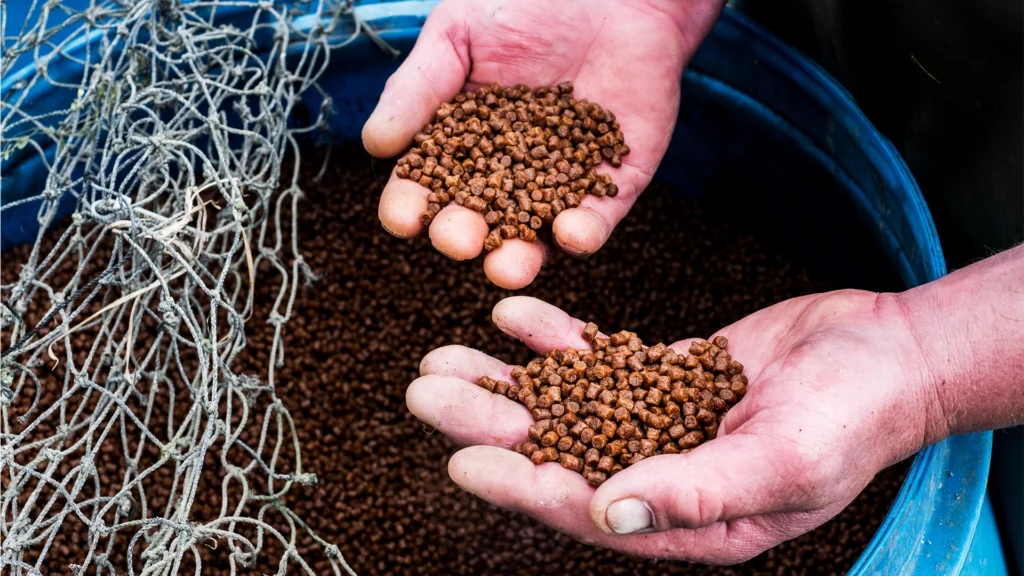
One of the commonly observed situations in production is an increase in feed consumption without a corresponding improvement in growth performance. Although this is often attributed to environmental factors, the underlying cause is generally the ineffective utilization of feed. Feed formulation, digestibility, physical structure, and the bioavailability of nutrients are among the factors that directly affect feed efficiency.
At Unifeed, we approach sustainability in production through measurable efficiency indicators. We develop our feed solutions with an approach that supports controlled growth, optimizes FCR performance, and makes production processes more predictable. Because environmental and economic sustainability can only create real value when they are addressed together.
In conclusion, feed efficiency is a strategic element located at the center of sustainable production. More efficient feed utilization provides cost control and profitability for producers while also creating a more balanced, long-term, and responsible production model.