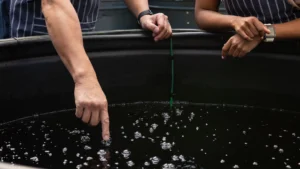
Fish feeding behaviour describes how fish approach feed, distribute themselves within the feeding area and consume the feed offered. Regular observation helps farmers recognise changes in appetite and review feeding management. In aquaculture, every feeding is also an opportunity to understand the fish and their farming conditions more closely.
Start by observing how fish respond when feed is introduced. A slower approach than during previous feedings, or feeding activity that ends earlier, is a change worth recording. The aim is to understand the usual response of the stock being farmed, rather than expect all fish to behave in the same way. Observations made at similar times and under comparable conditions make comparisons more useful.
The distribution of fish within the feeding area should also be considered. Observe whether the stock feeds across the area or gathers in a particular location. At the same time, check where the feed reaches the water and how the feeding equipment distributes it. Gathering in one spot should not be interpreted as an indicator of appetite or health on its own.
Uneaten feed is another observation that calls for a review of the feeding process. However, it does not always mean that too much feed has been offered. Feed quantity, feeding practices, water quality and fish health should be assessed together. Where automatic feeding systems are used, equipment settings and the actual quantity delivered should also be checked.
Water temperature and dissolved oxygen are important environmental factors that can affect feed intake. Changes in appetite should therefore be considered alongside water measurements. A reduction in feed consumption does not explain the cause on its own. Species, growth stage and farming conditions also need to be taken into account.
Consistent record-keeping makes observations more useful. For each tank, pond or cage, farmers can record feeding time, feed type, pellet size, quantity delivered, feeding response and visible uneaten feed. Tracking these details alongside water temperature and dissolved oxygen makes it easier to recognise recurring changes and review the results of management decisions.
More informed feeding decisions begin with careful observation. Watching fish behaviour, recording measurements and comparing changes over time provide a stronger foundation for feeding management. Consider Unifeed’s feed options for your species and growth stages alongside the conditions on your farm and your observations in the field.